Hezbollah's Missile Defense: Responding to Israeli Airspace Violations
The geopolitical landscape of the Middle East is perpetually fraught with complex dynamics, and few rivalries are as deeply entrenched and volatile as that between Hezbollah and Israel. While the world often focuses on the broader strategic implications of this conflict, a significant and recurring flashpoint revolves around aerial sovereignty. Specifically, Hezbollah's stated policy of deploying missile defense systems as a direct response to perceived Israeli airspace violations over Lebanon has been a consistent element of their engagement strategy. This article delves into the rationale, context, and implications of these actions, exploring the intricate balance of deterrence and provocation that defines this crucial aspect of the conflict. Understanding the nuances of when and why
Hezbollah missiles Israel, particularly in a defensive capacity against aerial incursions, is key to comprehending the region's security challenges.
The Rationale Behind Hezbollah's Anti-Aircraft Engagements
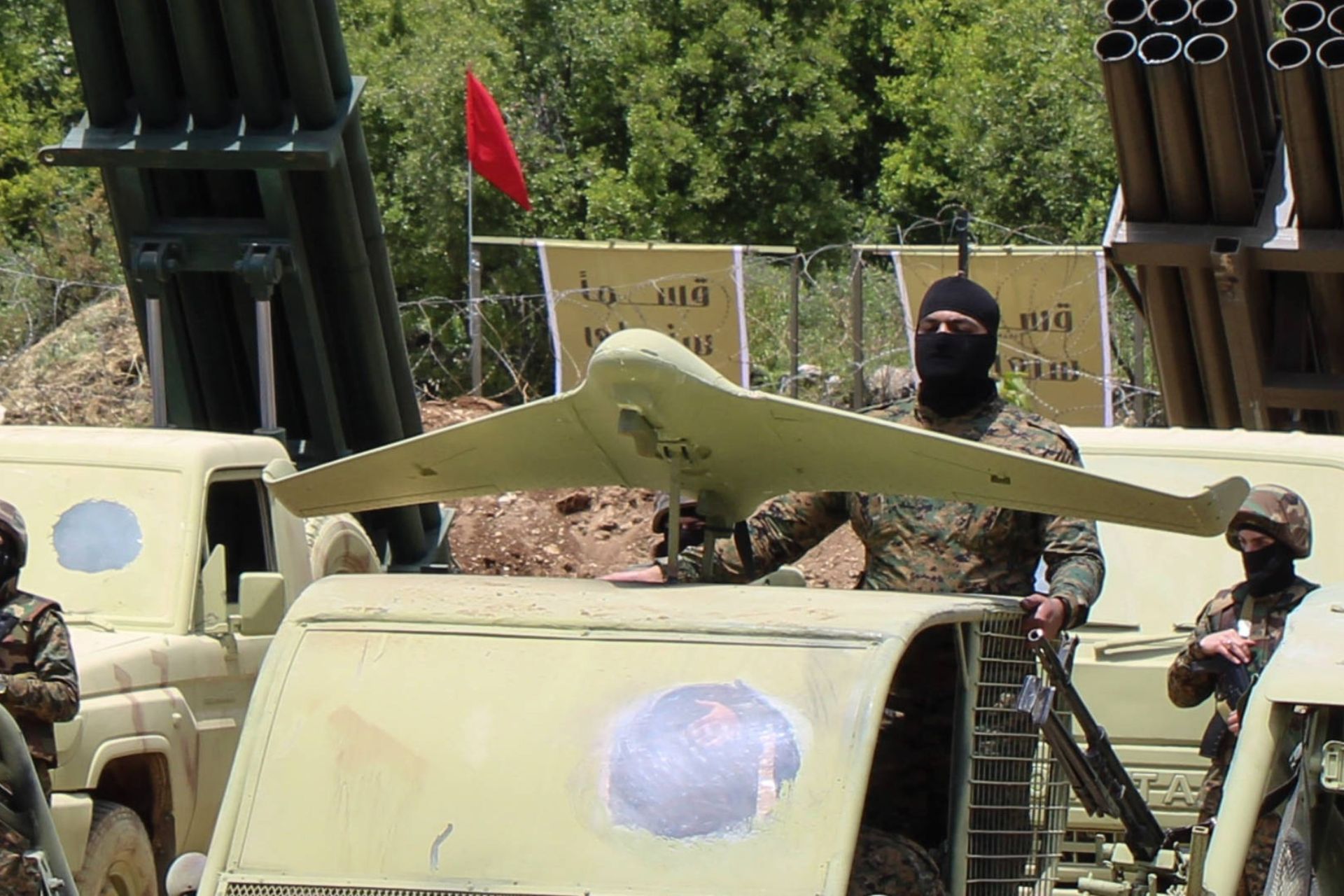
Hezbollah has consistently framed its use of anti-aircraft missiles as a legitimate defensive measure against Israeli military aircraft violating Lebanese airspace. From their perspective, these actions are not unprovoked aggression but a necessary response to ongoing encroachments on national sovereignty. The group views Israeli overflights, which often involve surveillance drones, reconnaissance aircraft, and occasionally fighter jets, as a direct challenge to Lebanon's territorial integrity and a form of "ongoing provocation."
These alleged violations are typically reported by Lebanese authorities and Hezbollah itself, often highlighting the psychological and security impact on the Lebanese population. The rationale is rooted in the principle of self-defense, asserting the right of Lebanon to protect its skies from foreign military presence. Hezbollah, as a powerful non-state actor with significant influence within Lebanon, positions itself as a primary defender of this sovereignty. The deployment of anti-aircraft capabilities, therefore, is portrayed as a deterrent mechanism, aimed at compelling Israel to cease these overflights.
The types of Israeli aircraft reportedly involved in these violations can range from small, persistent surveillance drones to more sophisticated fighter jets conducting various missions. In response, Hezbollah is believed to possess a range of anti-aircraft systems, though specifics are often shrouded in secrecy. These could include portable air defense systems (MANPADS) capable of targeting low-flying aircraft, and potentially more advanced surface-to-air missile (SAM) systems, though their exact capabilities and deployments are subject to constant intelligence monitoring and speculation. The stated limited scope of these engagements – specifically targeting military aircraft in Lebanese airspace – is central to Hezbollah's narrative of defensive action. For a deeper dive into the technicalities and strategic importance, readers might find value in
Understanding Hezbollah's Anti-Aircraft Missile Engagements.
The Broader Context: Ongoing Provocations and Regional Dynamics
While Hezbollah cites airspace violations as its immediate trigger for missile engagements, these incidents are embedded within a much broader and more complex tapestry of regional rivalry. Israel, for its part, justifies its aerial operations over Lebanon as essential for its national security. These operations are typically aimed at monitoring Hezbollah's activities, gathering intelligence on its military buildup, and interdicting the alleged transfer of advanced weaponry from Iran to Hezbollah via Syria. Israel views Hezbollah as a direct and existential threat, backed and armed by its arch-nemesis, Iran.
The concept of "Israel's ongoing provocation of Lebanon," as stated by Hezbollah, encapsulates this deep-seated mistrust and strategic competition. From an Israeli perspective, their actions are not provocations but necessary preemptive or defensive measures against a group that has historically launched attacks against Israeli targets and continues to pose a significant military challenge along its northern border. This creates a perpetual cycle of action and reaction, where each side perceives itself as responding to the other's aggressive stance.
This aerial dimension of the conflict is just one facet of a multi-layered "shadow war" that plays out across the Levant. It includes covert operations, cyber warfare, economic pressure, and proxy conflicts in other regional theaters. The engagements involving
Hezbollah missiles Israel aircraft serve as a visible manifestation of this deeper struggle, capable of rapidly escalating tensions from a localized incident into a broader confrontation. Each missile launch, successful or not, sends a message: Hezbollah is signaling its readiness to defend what it considers its sovereign territory, while Israel asserts its freedom of action to protect its security interests.
Beyond Airspace: Hezbollah's Strategic Posture
It is crucial to recognize that Hezbollah's activities extend far beyond the immediate defense of Lebanese airspace. As referenced in various intelligence assessments, Hezbollah is expected to continue planning and executing "terrorist actions against Israel or Israeli interests outside the Middle East." This dual strategic posture reveals the multifaceted nature of the organization: a powerful political and military force within Lebanon, advocating for national sovereignty, yet simultaneously operating as a global actor with a broader anti-Israel agenda.
This aspect highlights the group's ideological commitment to resistance against Israel, transcending geographical borders. Such planning could involve targeting Israeli embassies, Jewish community centers, or other assets abroad, leveraging a network of operatives and proxies. This makes Hezbollah a unique challenge, operating simultaneously as a quasi-state actor and a transnational militant organization. The pursuit of targets outside the immediate conflict zone complicates international efforts to manage the conflict and underscores the global reach of Hezbollah's threat. For a comprehensive understanding of this broader danger, one should refer to
Hezbollah's Ongoing Threat: Planning Attacks Against Israel. This dual capability—defensive missile engagements within Lebanon and offensive planning abroad—is a critical element in understanding the complete scope of the threat Hezbollah poses.
Analyzing the Impact and Implications
The recurrent incidents of Hezbollah targeting Israeli aircraft have profound implications for regional stability. Each engagement carries the inherent risk of miscalculation, potentially triggering a wider military escalation. A successful missile strike on an Israeli military aircraft could provoke a severe retaliatory response from Israel, leading to a tit-for-tat exchange that spirals into a full-blown conflict, as has been seen in past clashes. This constant state of alert and the hair-trigger nature of these interactions contribute significantly to the instability along the Israel-Lebanon border.
From the perspective of international law, these incidents raise complex questions about sovereignty, self-defense, and the use of force. Lebanon, supported by Hezbollah, argues that Israeli overflights violate its sovereignty and constitute acts of aggression, justifying a defensive response. Israel, conversely, asserts its right to self-defense against a hostile entity (Hezbollah) operating within Lebanon, arguing that Lebanon's failure to control Hezbollah necessitates its own actions. United Nations Security Council Resolution 1701, which ended the 2006 Lebanon War, explicitly calls for respect for Lebanon’s sovereignty and territorial integrity, but its implementation remains a contentious point for both sides.
The impact on civilian populations in both Lebanon and Israel is immense. The constant threat of escalation fosters an environment of fear and uncertainty. Communities living along the border are perpetually on edge, aware that any aerial incident could quickly devolve into heavy shelling or ground operations, displacing thousands and causing widespread destruction. This psychological toll is a critical, often overlooked, aspect of the conflict. International actors, including UNIFIL (United Nations Interim Force in Lebanon), play a crucial role in monitoring the border, reporting violations, and attempting to facilitate de-escalation, but their capacity to prevent incidents is limited by the underlying political and military dynamics.
The Escalation Ladder and De-escalation Challenges
The precise nature of these engagements means that even a single missile launch, regardless of its success in hitting a target, can push both sides further up the escalation ladder. The challenge lies in the absence of reliable, direct communication channels between Israel and Hezbollah, or even between Israel and the Lebanese state, to de-escalate tensions effectively during or after an incident. This lack of direct dialogue means that intentions can be easily misinterpreted, leading to disproportionate responses based on incomplete information or heightened emotions.
Informal backchannels, often mediated by third parties or through public statements, become critical but imperfect tools for signaling intent and setting red lines. Understanding the motivations and potential consequences of
Hezbollah missiles Israel in its defensive capacity is not merely an academic exercise; it's vital for regional stability. Practical tips for analysis often involve closely monitoring official statements from all parties, observing troop movements, and understanding the geopolitical context of each incident. The "grey zone" nature of this conflict, where conventional military actions intersect with non-state actor tactics and information warfare, makes de-escalation exceptionally difficult and complex.
In conclusion, Hezbollah's missile defense targeting Israeli airspace violations is a critical, recurring feature of the enduring conflict between the two entities. Driven by a stated commitment to defending Lebanese sovereignty, these engagements are set against a backdrop of deep-seated mistrust, Israeli security concerns, and Hezbollah's broader strategic agenda which includes planning actions against Israeli interests worldwide. The delicate balance of power, the constant risk of miscalculation, and the profound impact on civilian populations underscore the urgent need for stability in a region perpetually teetering on the brink of wider conflict. The dynamics of these aerial confrontations serve as a potent reminder of the multifaceted challenges that continue to define the Middle East's security landscape.