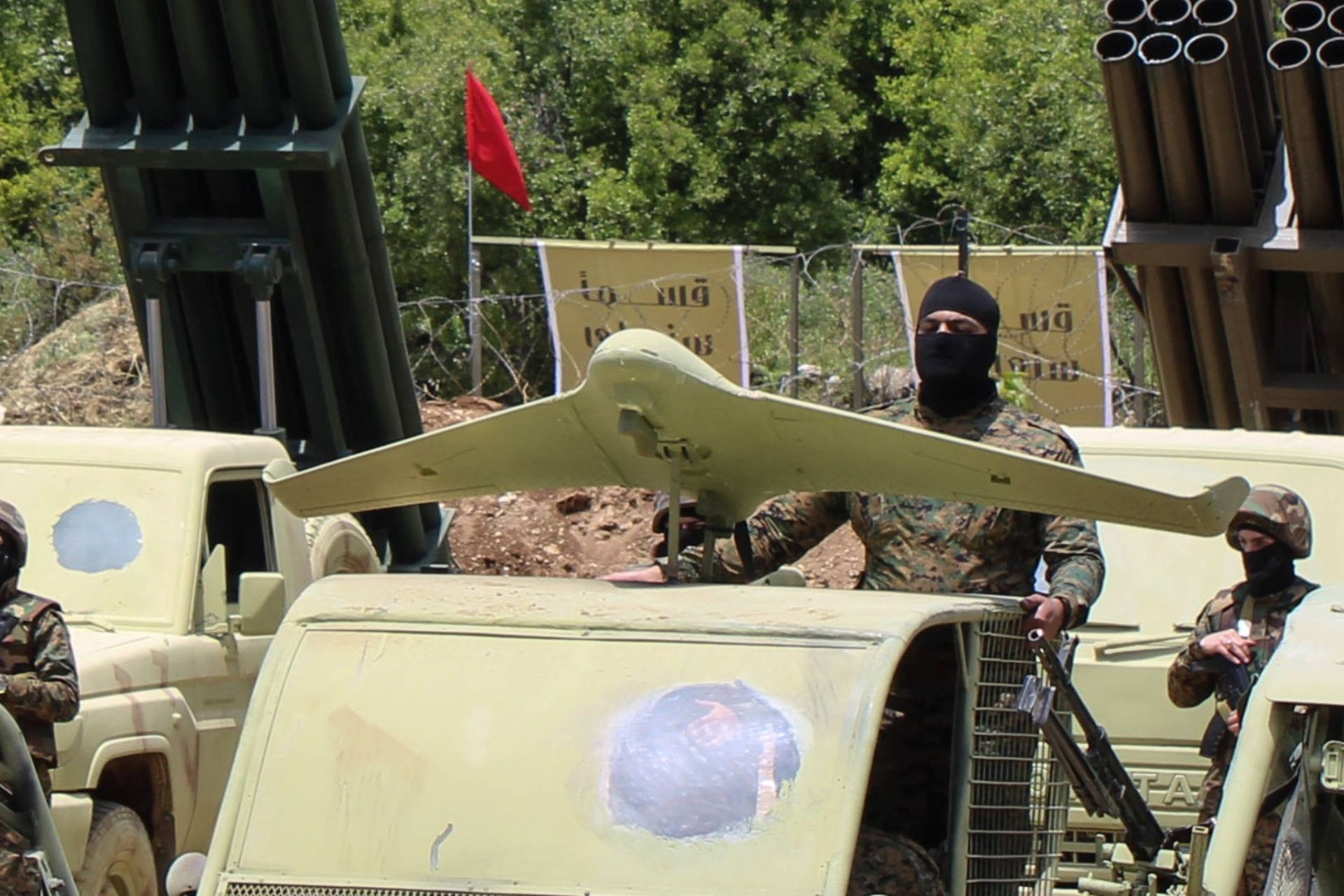
Understanding Hezbollah's Anti-Aircraft Missile Engagements
The intricate geopolitical landscape of the Middle East is perpetually shaped by various state and non-state actors, with Hezbollah standing as a formidable and often controversial force. Its military capabilities, particularly its anti-aircraft missile engagements, frequently draw international attention, highlighting a persistent tension between Lebanon and Israel. When we talk about хизбалла ракеты израиль (Hezbollah missiles Israel), we are delving into a complex dynamic of perceived territorial violations, defensive measures, and strategic signaling.
Hezbollah, a powerful Lebanese political party and militant group, has consistently asserted its right to defend Lebanese sovereignty. Central to this assertion are its claims regarding the use of anti-aircraft missiles. These engagements are rarely isolated incidents; instead, they are often presented by Hezbollah as direct responses to what it describes as Israeli military aircraft violating Lebanese airspace. This article aims to unpack the motivations, implications, and broader context surrounding Hezbollah's anti-aircraft missile activities.
The Evolving Threat Landscape: Hezbollah's Air Defense Capabilities
Over the years, Hezbollah has demonstrated a sophisticated and evolving military arsenal, much of which is believed to be supplied by Iran. While specific details of its anti-aircraft capabilities are often shrouded in secrecy and subject to strategic ambiguity, it is understood that the group possesses a range of surface-to-air missile (SAM) systems. These systems are crucial components of its defensive strategy, designed to challenge Israeli air superiority over Lebanese territory.
Historically, Hezbollah's engagements have been reported to target Israeli military aircraft, including reconnaissance drones and fighter jets. The group's stated justification for these actions is consistently rooted in the defense of Lebanese airspace. From Hezbollah's perspective, these are legitimate acts of self-defense against ongoing provocations and infringements on national sovereignty. The presence of these capabilities means that any Israeli aerial operation over Lebanon carries a potential risk, even if Hezbollah's older systems may not always pose a significant threat to advanced Israeli aircraft.
Insight: While Hezbollah claims to use these missiles defensively, the very existence and readiness of such systems contribute to a heightened state of alert and a constant risk of escalation in the region. Understanding the psychological and political impact of these engagements is as crucial as analyzing their military effectiveness.
Analyzing Hezbollah's Engagements: Defensive Posture or Escalation?
The narrative surrounding Hezbollah's anti-aircraft missile launches often presents a stark dichotomy: defensive action versus aggressive provocation. From Hezbollah's viewpoint, Israeli military aircraft conducting surveillance or reconnaissance flights over Lebanon constitute a clear violation of Lebanese sovereignty. Therefore, the launch of anti-aircraft missiles is framed as a necessary and proportional response to protect national borders and deter further incursions.
This perspective is vital for comprehending the group's public statements and its internal propaganda. Hezbollah frames itself as the protector of Lebanon against external aggression, a role that resonates with segments of the Lebanese population. Each launch, regardless of its success in downing an aircraft, serves as a powerful message of defiance and capability.
However, from Israel's standpoint, these alleged airspace violations are often portrayed as essential intelligence-gathering missions, aimed at monitoring Hezbollah's activities, preventing arms transfers, or preparing for potential threats. Therefore, any missile launch from Hezbollah is seen as an act of hostility and a challenge to regional stability, potentially necessitating a retaliatory strike.
This perpetual cycle of action and reaction forms the core of the dynamic. When хизбалла ракеты израиль (Hezbollah missiles Israel) are fired, even if unsuccessful, they immediately raise the specter of a wider conflict. Analyzing these incidents requires careful consideration of both sides' narratives and strategic objectives. For a deeper dive into the group's defensive strategies, refer to our related article: Hezbollah's Missile Defense: Targeting Israeli Airspace Violations.
The Legal and Political Dimensions
The debate over airspace violations and defensive responses is not just military; it's deeply rooted in international law and political maneuvering. Lebanon consistently lodges complaints with the United Nations regarding Israeli airspace violations, citing UN Security Council resolutions. Conversely, Israel views Hezbollah as a terrorist organization and a significant threat, arguing that its actions are necessary for its national security.
This creates a complex legal and political quagmire where both sides claim the moral and legal high ground. The international community often finds itself in a difficult position, urging restraint while acknowledging the legitimate security concerns of all parties. The perception of who is the aggressor and who is the defender often depends on one's geopolitical alignment and interpretation of events.
Beyond Air Defense: Hezbollah's Broader Strategic Objectives
While anti-aircraft missile engagements are a visible component of Hezbollah's military operations, they represent only one facet of its broader strategic objectives. Hezbollah is not solely a military force; it is also a political movement with significant social influence in Lebanon, deeply embedded in the country's infrastructure and governance. Its operations are therefore multi-layered, serving not only military aims but also political and ideological ones.
Beyond responding to perceived airspace violations, there is a consistent expectation, as noted by various intelligence agencies, that Hezbollah continues to plan and prepare for terrorist actions against Israel or Israeli interests, both within the Middle East and globally. This strategic intent goes far beyond mere air defense and highlights the group's long-term confrontation with Israel.
Hezbollah's extensive rocket arsenal, separate from its anti-aircraft capabilities, is a testament to its offensive potential. These rockets are intended for saturation attacks against Israeli population centers and military targets, posing a different, yet equally grave, threat. The threat of хизбалла ракеты израиль (Hezbollah missiles Israel) therefore encompasses both air defense and offensive strike capabilities, making it a multifaceted challenge for Israeli security planners.
Practical Implications and Regional Stability
The constant interplay of Hezbollah's air defense activities and its broader hostile intentions towards Israel creates an environment of perpetual instability in the region. Each incident, whether a drone downing or an unsuccessful missile launch, carries the inherent risk of miscalculation and rapid escalation. The "rules of engagement" are often unwritten and tested in real-time, making predicting outcomes difficult.
- Risk of Escalation: Even minor incidents can quickly spiral into larger confrontations, drawing in other regional actors and potentially leading to a full-scale conflict.
- Deterrence vs. Provocation: Both sides employ strategies that can be interpreted as either deterrence or provocation, depending on the observer.
- Intelligence Gathering: Israeli overflights are often linked to gathering intelligence on Hezbollah's evolving capabilities, including its missile sites and command centers.
- Internal Lebanese Dynamics: Hezbollah's actions also have significant implications for Lebanon's internal stability, often polarizing political factions and impacting the country's sovereignty.
Tip for Analysts: When assessing the impact of Hezbollah's anti-aircraft engagements, it is crucial to analyze not just the immediate military outcome, but also the signaling effect. What message is Hezbollah trying to send to Israel, to its own constituency, and to its regional allies (like Iran)? This requires looking beyond the tactical and into the strategic implications of each action.
For a comprehensive understanding of Hezbollah's broader strategic threat, consider exploring: Hezbollah's Ongoing Threat: Planning Attacks Against Israel.
Conclusion
Hezbollah's anti-aircraft missile engagements are a critical, albeit complex, element of the ongoing conflict between the group and Israel. Framed by Hezbollah as essential defensive measures against Israeli airspace violations, these actions are simultaneously viewed by Israel as acts of aggression and challenges to its security. The dynamic of хизбалла ракеты израиль (Hezbollah missiles Israel) embodies a tense standoff, where each incident holds the potential for broader escalation. Understanding these engagements requires an appreciation of both the tactical realities and the overarching strategic narratives employed by both sides, recognizing that Hezbollah's air defense capabilities are part of a much larger, multifaceted confrontation that continues to shape the delicate balance of power in the Middle East.